

What Is a CV vs Resume? Understanding the Difference Before You Apply for Your Next Job
 Jul 13,2026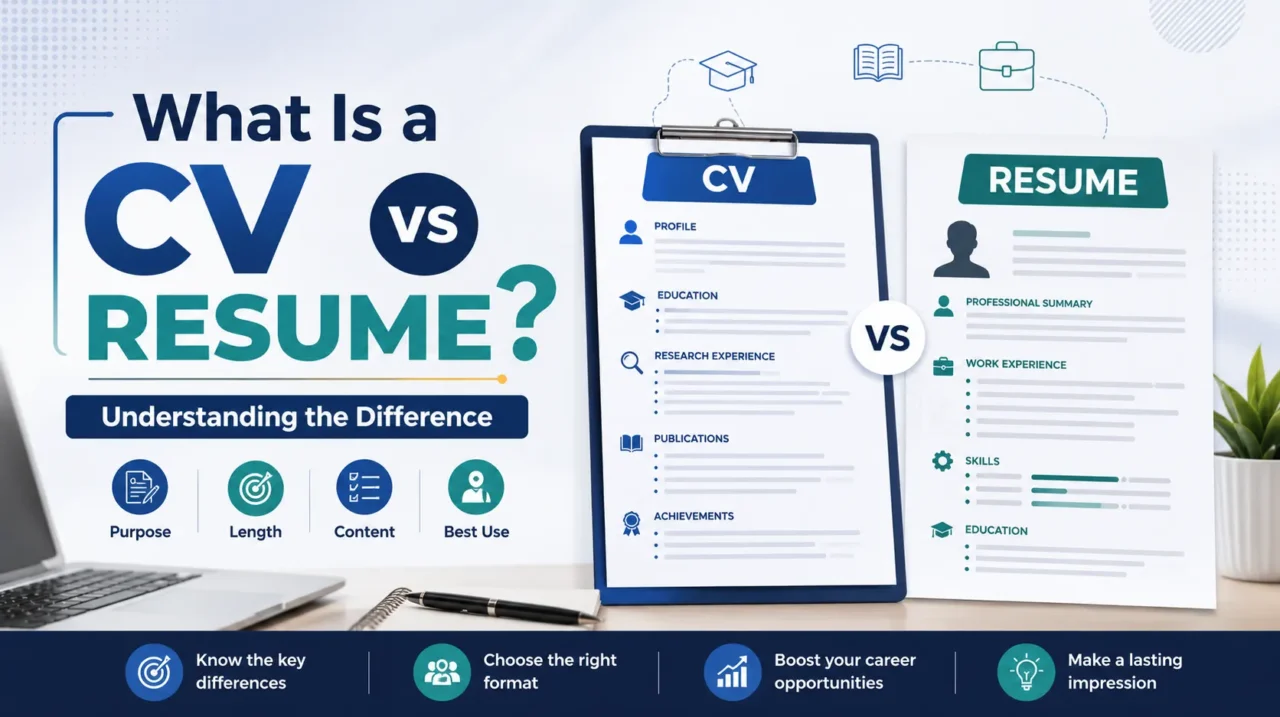
What Is a CV vs Resume?
A CV (Curriculum Vitae) is a detailed document that presents your complete academic, professional, and research background, while a resume is a concise document tailored to a specific job application. A CV is commonly used for academic, research, and medical careers, whereas a resume is preferred for most corporate and private-sector jobs because it focuses on relevant skills, achievements, and experience.
What Is a CV vs Resume? Understanding the Difference
Applying for a job can be exciting, but one of the most common questions job seekers ask is, “What is a CV vs resume?” Although these terms are often used interchangeably, they are not the same. Understanding the difference can help you choose the right document, make a stronger first impression, and improve your chances of getting shortlisted for interviews.
A Curriculum Vitae (CV) and a resume are both professional documents that showcase your qualifications, skills, and work experience. However, they differ in purpose, length, structure, and the type of information they include. Using the wrong document for a job application may confuse recruiters or fail to meet the employer’s expectations.
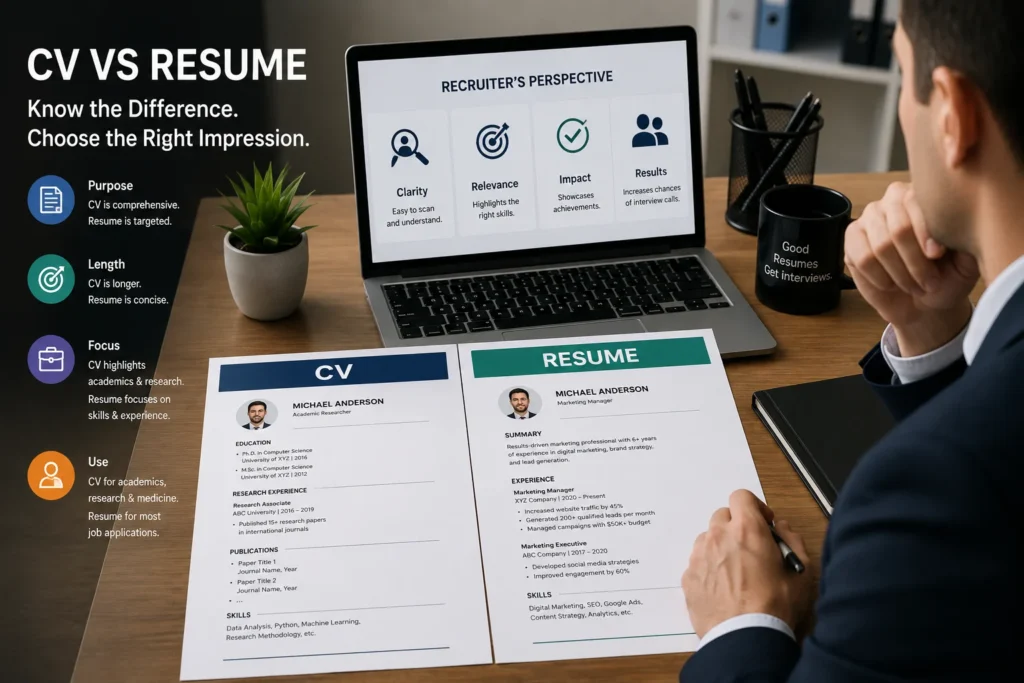
In today’s competitive hiring landscape, recruiters often spend only a few seconds reviewing each application before deciding whether to continue reading. Additionally, many organizations use Applicant Tracking Systems (ATS) to filter resumes before they reach hiring managers. This means your application should not only be well-written but also optimized for modern recruitment processes.
At JobApplyExpert, we have worked with professionals from industries such as Information Technology (IT), Healthcare, Finance, Marketing, Engineering, Human Resources, and Executive Leadership. One common challenge we frequently notice is that candidates submit the same document for every application without considering whether a CV or a resume is more appropriate.
For example, an academic institution may expect a detailed CV outlining research projects, publications, certifications, and teaching experience. In contrast, a corporate employer typically prefers a concise, ATS-friendly resume that highlights relevant achievements, technical skills, and measurable results.
Knowing what is a CV vs resume is more than understanding definitions—it is about presenting your qualifications in the format that recruiters expect. Choosing the correct document demonstrates professionalism, improves readability, and increases your chances of progressing through the hiring process.
Whether you are a recent graduate applying for your first job, an experienced professional seeking career growth, or someone planning an international career move, understanding the difference between a CV and a resume is an important step toward building a successful job application strategy.
Why Understanding the Difference Matters
Many qualified professionals miss interview opportunities not because they lack experience, but because they submit the wrong type of application document.
Using a CV when an employer requests a resume—or vice versa—can reduce your chances of being shortlisted. Recruiters expect documents that match the role, industry, and hiring process.
Understanding what is a CV vs resume helps you:
- Present your qualifications in the correct format.
- Improve compatibility with Applicant Tracking Systems (ATS).
- Showcase relevant skills and achievements.
- Create a stronger first impression.
- Increase recruiter engagement.
- Improve interview opportunities.
Choosing the right document is one of the simplest yet most effective ways to strengthen your job application.
📊 Industry Insight
Recent recruitment trends show that many medium and large organizations use Applicant Tracking Systems (ATS) to screen applications before they are reviewed by recruiters. These systems help employers manage large volumes of applications by identifying resumes that closely match the job requirements. This is why tailoring your application document to the role and using the correct format is increasingly important in today’s hiring process.
What Is a CV and What Is a Resume?
What Is a Curriculum Vitae (CV)?
A Curriculum Vitae (CV) is a detailed document that outlines your complete academic, professional, and career history. The term Curriculum Vitae is Latin for “course of life,” which reflects its purpose of providing a comprehensive overview of your qualifications.
Unlike a resume, a CV is not limited to one or two pages. It grows throughout your career as you gain new experience, certifications, publications, research projects, awards, and professional achievements.
A professional CV typically includes:
- Personal Information
- Professional Summary
- Educational Qualifications
- Work Experience
- Research Projects
- Publications
- Certifications
- Conferences & Workshops
- Awards & Achievements
- Technical Skills
- Professional Memberships
- Volunteer Experience
- References (if required)
CVs are commonly requested for:
- Academic Positions
- Research Opportunities
- Medical Professionals
- Government Organizations
- International Universities
- Fellowships & Scholarships
Because a CV provides a complete professional history, it allows employers and academic institutions to evaluate your qualifications in greater detail.
What Is a Resume?
A resume is a concise, targeted document created specifically for a job application. Unlike a CV, a resume highlights only the most relevant qualifications, skills, and accomplishments related to the position you are applying for.
Most resumes are between one and two pages and are customized for each application.
A professional resume generally includes:
- Contact Information
- Professional Summary
- Core Skills
- Work Experience
- Education
- Certifications
- Technical Skills
- Key Achievements
Modern resumes are designed to be ATS-friendly, making it easier for recruiters and Applicant Tracking Systems to identify relevant skills and qualifications.
Instead of providing your complete career history, a resume focuses on what matters most for the specific role.
Is a CV the Same as a Resume?
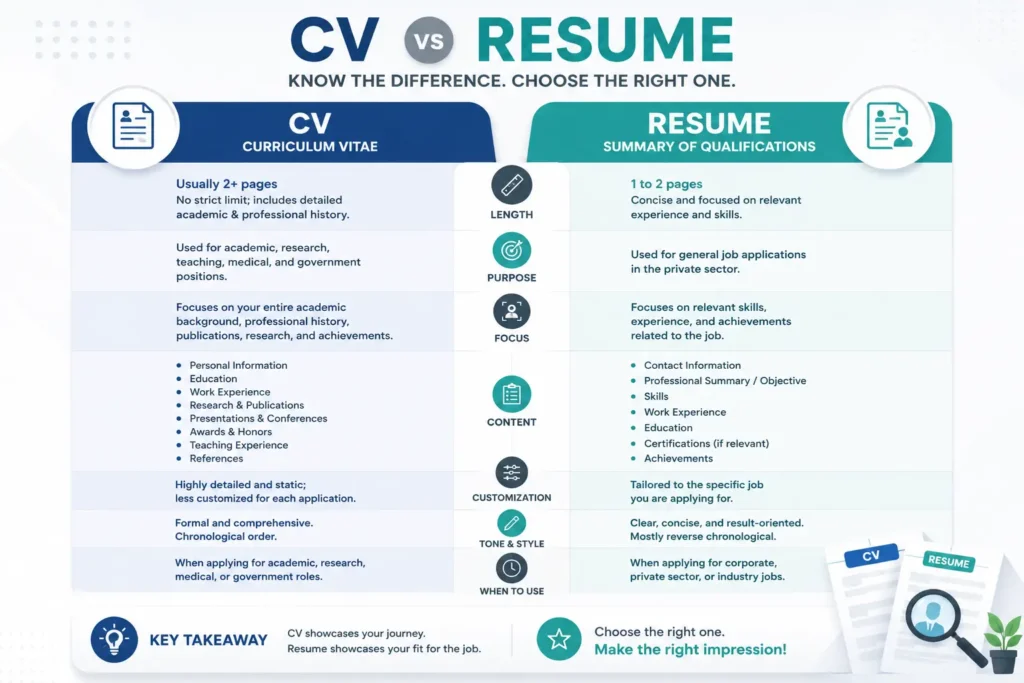
No. A CV provides a complete record of your academic and professional history, while a resume is a shorter, job-specific document designed to showcase your most relevant skills and achievements. Most corporate employers prefer resumes, whereas academic and research institutions often require CVs.
CV vs Resume Comparison
| Feature | CV | Resume |
| Meaning | Curriculum Vitae | Professional Resume |
| Purpose | Complete career history | Job-specific application |
| Length | 2–10+ pages | 1–2 pages |
| Customization | Rarely customized | Customized for every job |
| ATS Optimization | Limited | Highly important |
| Best For | Academia, Research, Medical | Corporate Jobs |
| Includes Publications | Yes | No |
| Includes Research | Yes | Rarely |
| Includes Certifications | Yes | Relevant Certifications |
| Focus | Complete Career | Relevant Experience |
| Recruiter Reading Time | Detailed Review | Quick Screening |
This comparison makes it easier to understand why choosing the right document is important for different career paths.
When Should You Use a CV or a Resume?
Choosing between a CV and a resume depends on the position, employer, and country where you are applying.
Use a CV When Applying For:
- Academic positions
- Universities
- Research organizations
- Medical institutions
- PhD programs
- Scholarships
- Fellowships
- International academic opportunities
A CV allows employers to review your complete educational and professional journey.
Use a Resume When Applying For:
- IT Jobs
- Marketing Roles
- Sales Positions
- Finance Careers
- Human Resources
- Engineering
- Customer Service
- Corporate Organizations
- Startups
- Private Companies
A resume helps recruiters quickly identify your qualifications and determine whether you are suitable for the role.
Common Mistakes Job Seekers Make
Many qualified candidates fail to secure interviews because of avoidable resume mistakes.
These include:
- Using the same resume for every application
- Submitting a CV when a resume is requested
- Ignoring ATS keywords
- Listing duties instead of measurable achievements
- Writing long paragraphs instead of concise bullet points
- Including outdated or irrelevant information
- Using poor formatting
- Failing to proofread before submitting
Avoiding these mistakes can significantly improve your chances of receiving interview invitations.
Expert Insight from JobApplyExpert
At JobApplyExpert, we have reviewed resumes and CVs for professionals across Information Technology, Healthcare, Finance, Marketing, Engineering, Human Resources, and Executive Leadership.
One of the most common issues we identify is that many candidates use the same document for every application without tailoring it to the employer’s expectations.
Our experience shows that resumes customized with ATS-friendly keywords, measurable achievements, and industry-specific terminology generally perform better than generic resumes. Similarly, academic professionals benefit from detailed CVs that effectively showcase their research, publications, and educational accomplishments.
Choosing the right document and customizing it for your target role is one of the most effective ways to improve recruiter engagement.
Can a Professional Resume Writer Help?
Yes. Professional resume writers understand recruiter expectations, ATS requirements, and industry-specific hiring trends. They create customized resumes that improve readability, optimize keywords, and showcase measurable achievements, increasing your chances of receiving interview calls.
People Also Ask
Which is better, a CV or a resume?
Neither is better. The right document depends on the employer and the type of position. Corporate jobs generally require resumes, while academic and research positions usually require CVs.
Can I use a CV instead of a resume?
Only if the employer specifically requests a CV. Most private-sector companies expect a resume that is concise and tailored to the position.
How long should a professional resume be?
For most professionals, a resume should be one or two pages long and include only the most relevant qualifications and achievements.
Do recruiters prefer ATS-friendly resumes?
Yes. ATS-friendly resumes improve the chances of passing applicant tracking systems and reaching hiring managers.
Key Takeaways
- A CV provides your complete academic and professional history
- A resume highlights relevant experience for a specific job
- Corporate employers usually prefer resumes
- Academic and research institutions typically require CVs
- ATS optimization improves recruiter visibility
- Customizing your resume for each application increases interview opportunities
Conclusion
Understanding what is a CV vs resume is essential for every job seeker. Although both documents highlight your qualifications and experience, they serve different purposes and are used in different hiring environments.
A CV offers a comprehensive overview of your academic and professional journey, making it suitable for research, education, and medical careers. A resume, on the other hand, is a concise, job-focused document designed to demonstrate why you are the best candidate for a specific position.
Selecting the right document, optimizing it for Applicant Tracking Systems, and tailoring it to the employer’s requirements can significantly improve your chances of securing interviews.
Whether you need a professionally written resume, an academic CV, or expert career guidance, taking the time to present your qualifications effectively is an investment in your future career success.
Ready to Build a Resume That Gets Results?
At JobApplyExpert, we help job seekers create ATS-friendly resumes and professionally written CVs that attract recruiters and increase interview opportunities.
Our experienced resume writers understand industry-specific hiring requirements and create personalized documents that showcase your strengths, achievements, and career goals.
Take the next step toward your dream career with JobApplyExpert and let our experts help you make a lasting first impression.

 Sep 09, 2026

