


Why One Resume Is Not Enough for Every Job Application
 Aug 14,2026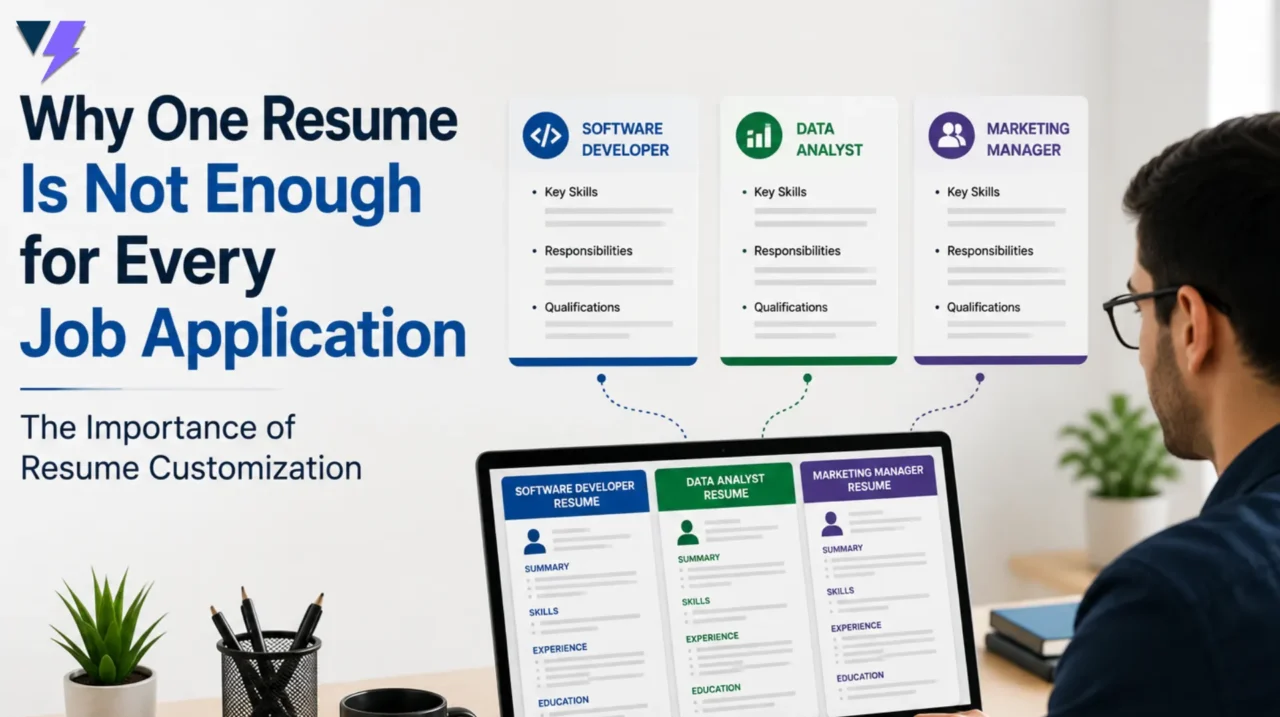
Sending the same resume to every employer may seem efficient. You create one document, keep it updated, and attach it whenever you find a suitable opening. But there is one problem: every job is different.
Even when two positions have similar titles, employers may prioritize different skills, responsibilities, qualifications, and achievements. A resume that works well for one opportunity may not highlight the experience another employer is looking for.
This is why resume customization is such an important part of a successful job search, particularly when working with professional Resume Writing Services. Instead of changing your entire career story for every application, you adjust the way your genuine experience is presented so it speaks directly to the requirements of each position.
Why Is Resume Customization Important?
Resume customization means tailoring your resume to match the specific requirements, skills, keywords, and priorities of a particular job. It helps recruiters quickly identify your most relevant qualifications while making your application more relevant to the position.
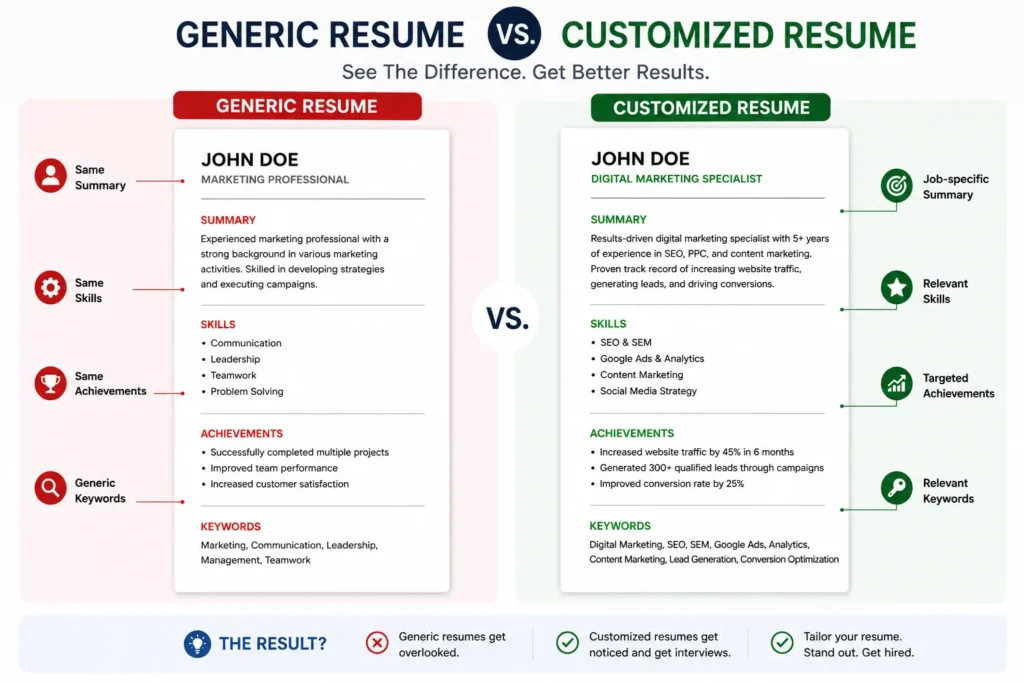
Think of your resume as a professional introduction. If you’re applying for a marketing manager position, your marketing strategy, campaign results, and leadership experience should be prominent. For a content marketing role, your writing, SEO, content strategy, and audience growth experience may deserve more attention.
Your experience hasn’t changed. The emphasis has.
That small difference can make your application more relevant without compromising authenticity.
Learn more about how we customize every resume before applying and how different job requirements can influence the way relevant experience is presented.
How Do Recruiters and ATS Systems Read Your Resume?
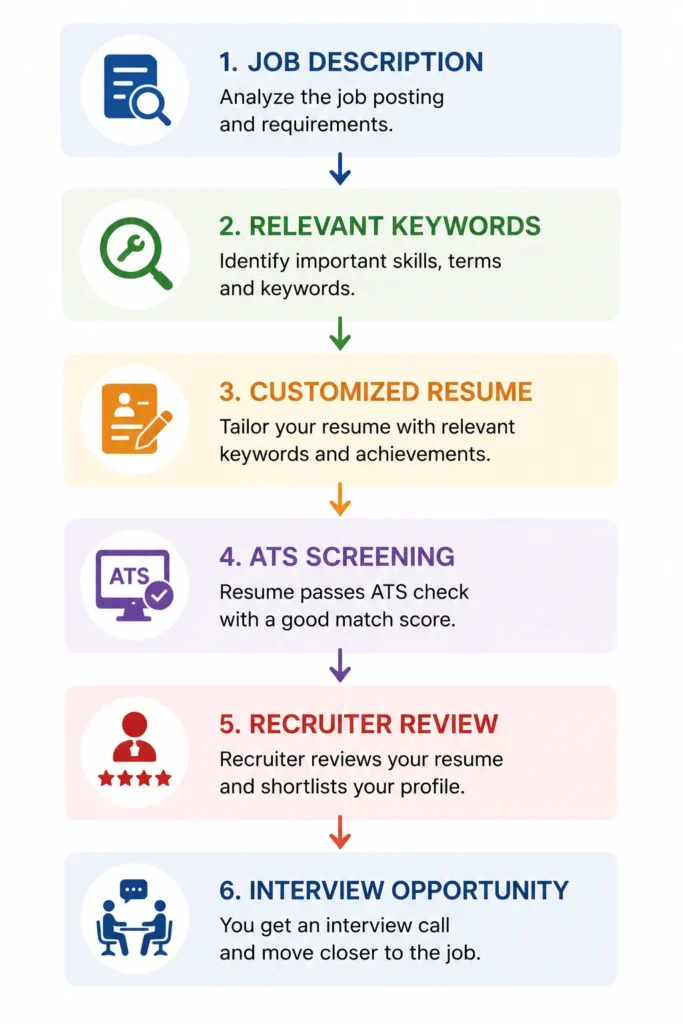
Before a recruiter reviews many applications, an Applicant Tracking System (ATS) may be used to organize and filter resumes. Depending on the employer and software, the system may identify information such as job titles, skills, qualifications, certifications, and relevant keywords.
This makes keyword relevance important.
If a job description repeatedly mentions “project management,” “budget management,” and “cross-functional teams,” and you genuinely have experience in those areas, those concepts should appear naturally in your resume.
However, resume customization is not about copying every phrase from a job description. Adding keywords without evidence can make a resume sound unnatural and may create a misleading impression.
The better approach is to identify the requirements that genuinely match your background and make those qualifications easier to find.
If you’ve been submitting applications without receiving interviews, it may also be useful to understand why your resume is getting rejected.
What Should You Customize in Your Resume?
You don’t need to rewrite your entire resume for every application. Focus on the sections that have the greatest impact.
1. Professional Summary
Adjust your opening summary to reflect the type of role you’re pursuing.
For example, a general marketing professional might emphasize digital campaigns for one position and content strategy or brand management for another.
2. Skills Section
Review the job description and identify relevant skills you actually possess. Prioritize those skills in your resume rather than presenting a long, generic list.
3. Work Experience
Your previous roles don’t change, but the achievements you emphasize can.
Choose accomplishments that demonstrate the abilities most relevant to the position.
4. Keywords
Identify important terms related to the role, industry, tools, certifications, and responsibilities. Include them naturally when they accurately describe your experience.
5. Career Highlights
If you have several strong achievements, lead with the ones most closely connected to the employer’s needs
Understanding what makes a professional resume different can also help you identify which parts of your current resume need improvement.
How Can You Customize a Resume Without Losing Your Authenticity?
One concern job seekers often have is that tailoring a resume for every position will make it feel artificial.
It doesn’t have to.
The key is to customize the presentation, not invent the experience.
Use these simple guidelines:
- Never add skills you don’t actually have.
- Don’t exaggerate achievements.
- Use accurate job titles and dates.
- Highlight relevant accomplishments from your real experience.
- Keep your professional voice consistent.
- Use keywords only when they genuinely apply to your background.
Your resume should remain an honest representation of your career. Customization simply makes the most relevant parts easier for the employer to recognize.
A Simple Resume Customization Process
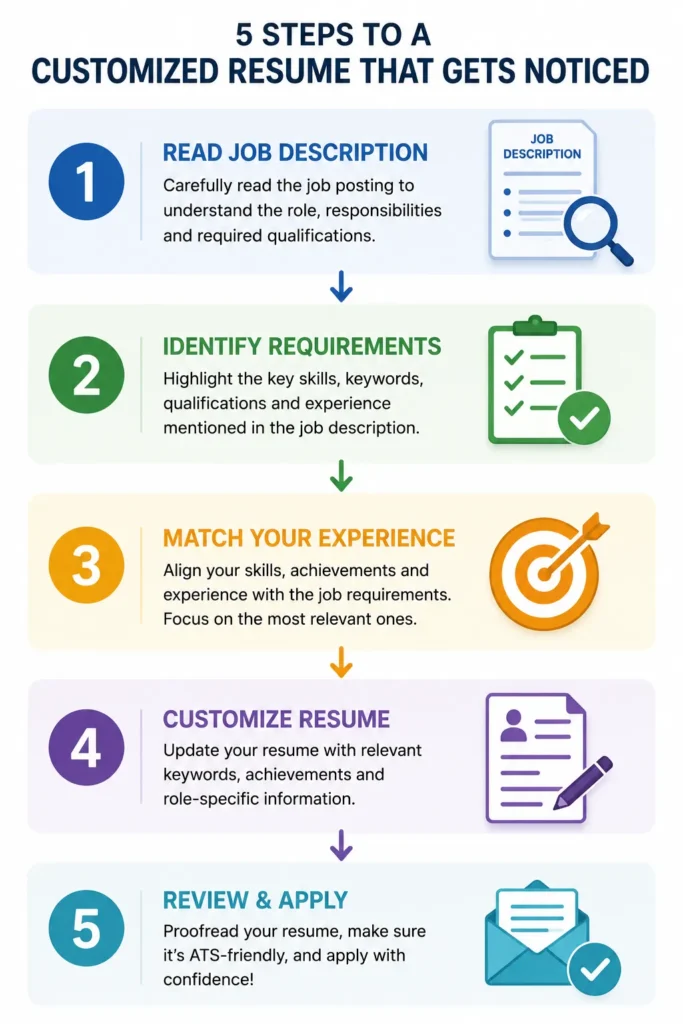
You can make resume customization easier by following the same process for each application.
Step 1: Read the job description carefully.
Identify the most important responsibilities, skills, qualifications, and keywords.
Step 2: Compare the requirements with your experience.
Separate the requirements you genuinely meet from those you don’t.
Step 3: Prioritize relevant achievements.
Move the most relevant accomplishments into stronger positions within your resume.
Step 4: Adjust your summary and skills.
Make sure the opening section immediately communicates your suitability for the role.
Step 5: Review the final document.
Check that the resume is accurate, readable, consistent, and aligned with the position before submitting it.
What Happens When You Use the Same Resume Everywhere?
A generic resume isn’t necessarily a bad resume. The problem is that it may not clearly communicate your suitability for every opportunity.
For example, an employer looking for a project manager may want evidence of budgets, timelines, teams, and project delivery. Another employer hiring for an operations role may be more interested in process improvement, efficiency, vendor management, and cost control.
If your resume gives both employers exactly the same information in exactly the same order, the most relevant experience may not stand out.
That is why quality job applications require more than simply attaching a resume and clicking submit.
Expert Insight: What Makes Customization Effective?
From a career support perspective, one of the most common resume problems is not a lack of experience but a lack of focus. Candidates may have strong accomplishments, yet those accomplishments can get buried under generic descriptions.
Effective resume customization brings the most relevant evidence forward without changing the truth of the candidate’s career story.
The strongest approach combines accurate information, job-specific relevance, clear writing, and a format that is easy for both recruitment systems and people to understand.
If you’re unsure which roles to target or how to position your experience, Career Consultant Services can provide broader career guidance.
Final Takeaway
One resume can provide the foundation for your job search, but it shouldn’t necessarily be the final version you submit for every position.
Resume customization helps connect your genuine skills and achievements with the specific needs of each employer. By adjusting your summary, skills, keywords, and most relevant accomplishments, you can create applications that are more focused and easier for recruiters to evaluate.
You can also strengthen your overall approach by combining resume customization with targeted Job Application Services.
You don’t need to reinvent your career for every job. You simply need to make sure the right parts of your experience are visible for the right opportunity.
In a competitive job market, that difference can turn a generic application into a much stronger representation of what you can offer.
One resume can provide the foundation for your job search, but it shouldn’t necessarily be the final version you submit for every position.

 Sep 09, 2026

