Tech Resume: How to Tailor Your Resume for the Tech Job Market
Sep 03,2026
A Tech Resume needs to do more than list your programming languages, tools, job titles, and certifications. In a competitive technology job market, recruiters want to quickly understand whether your skills match the role, what you have actually accomplished, and how your experience could contribute to their team.
Whether you are applying for software development, cybersecurity, cloud engineering, data science, DevOps, AI, IT support, or another technology role, tailoring your resume to the position can make your application much more relevant. A strong Tech Resume combines clear formatting, relevant technical skills, practical projects, measurable achievements, and keywords that accurately reflect the job description.
The goal isn’t to create a completely different resume for every application. It is to adjust your existing experience so the most relevant information is easy to find.
What Makes a Tech Resume Different?
Technology roles can have very specific requirements. Two jobs may both use the title “Software Engineer,” for example, but one might focus on Python and machine learning while another emphasizes Java, cloud infrastructure, and distributed systems.
A strong Tech Resume therefore needs to answer three questions quickly:
What technology skills do you have?
Where have you applied those skills?
What results did you achieve?
Instead of simply writing “experienced with AWS,” explain how you used AWS in a professional or project environment.
For example:
Basic: Experienced with AWS.
Stronger: Managed AWS cloud infrastructure and automated deployment workflows to improve application release efficiency.
The second version provides context and demonstrates practical experience.
How Should You Format a Tech Resume?
The best resume format for most technology positions is simple, professional, and easy to scan.
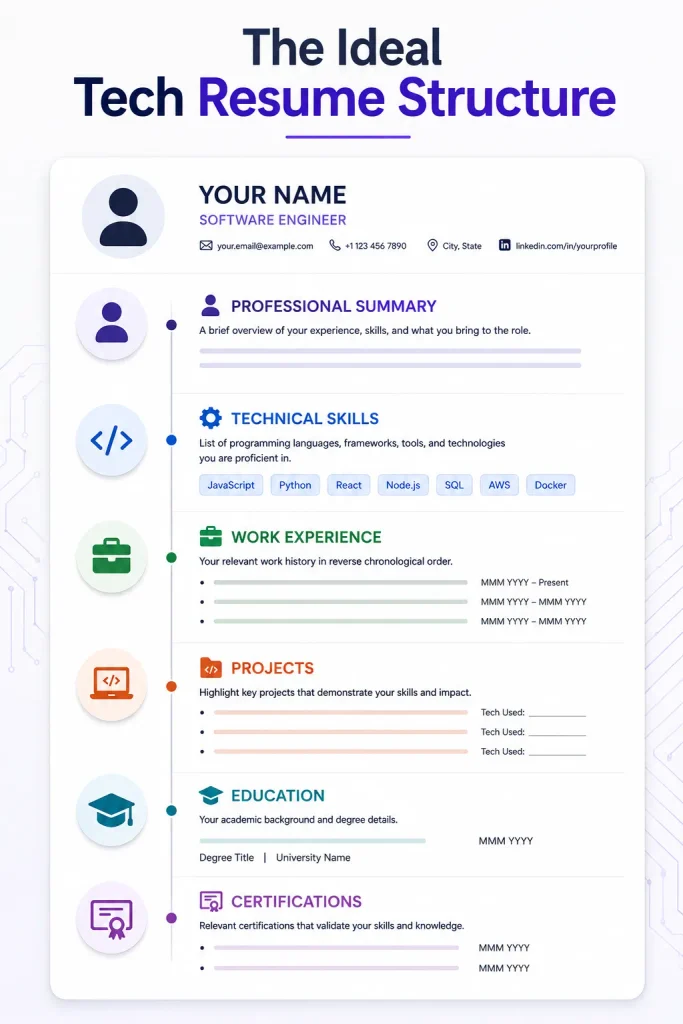
A practical structure includes:
Contact information
Professional summary
Technical skills
Professional experience
Projects
Education
Certifications
Use clear section headings, consistent spacing, readable fonts, and a straightforward layout. A single-column structure is generally a safe choice when you want your resume to be easily processed by applicant tracking systems.
Avoid unnecessary graphics, text boxes, complicated tables, decorative elements, or unusual layouts that could make important information difficult to extract.
Your formatting should support your content, not compete with it.
If you’re creating a resume specifically for an IT position, our guide to creating a professional IT resume provides additional tips on technical skills, projects, certifications, and achievements.
Highlight the Technical Skills That Matter
One of the most common mistakes in a Tech Resume is creating an enormous list of technologies.
Listing 30 or 40 tools doesn’t automatically make a candidate look more qualified. It can actually make it harder for recruiters to identify your strongest skills.
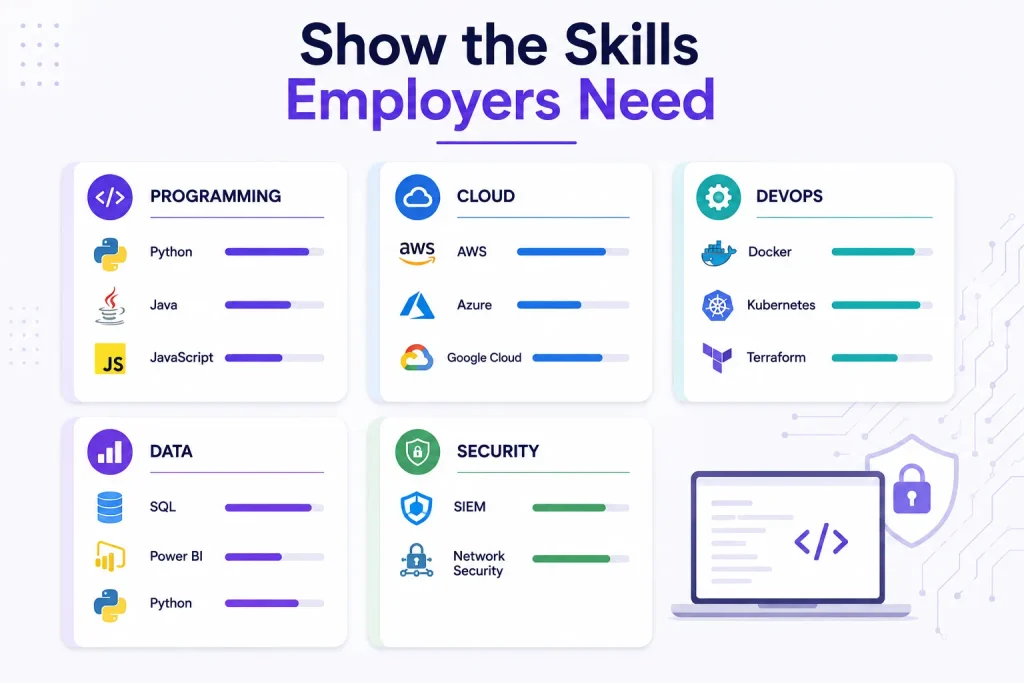
Instead, organize your technical skills into relevant categories.
Example
Programming: Python, Java, JavaScript, C++
Cloud: AWS, Azure, Google Cloud
Databases: PostgreSQL, MySQL, MongoDB
DevOps: Docker, Kubernetes, Jenkins, Terraform
Data: SQL, Power BI, Spark
Only include technologies you genuinely understand and can discuss during an interview.
If the target position emphasizes Kubernetes, Docker, AWS, and Terraform and you have hands-on experience with those technologies, make them easy to find rather than hiding them in a long list.
Turn Work Experience Into Measurable Achievements
Your professional experience is usually the most important part of your Tech Resume.
Instead of describing only what you were responsible for, explain what you accomplished.
Consider the difference:
Managed application deployments.
Compared with:
Automated CI/CD deployment workflows, reducing manual release steps and improving deployment consistency across production environments.
The second statement gives the employer a better idea of your contribution.
Whenever possible, include measurable evidence such as:
Percentage improvements
Cost savings
Number of users supported
System uptime
Project size
Processing speed
Deployment frequency
Performance improvements
Reduced response times
You don’t need a number in every bullet point. The important thing is to show impact, not just activity.
Showcase Relevant Technology Projects
Projects can strengthen a Tech Resume, especially for students, recent graduates, career changers, freelancers, and professionals moving into a new technology specialization.
A good project description should explain:
What did you build?
Which technologies did you use?
What was your contribution?
What was the outcome?
For example:
Customer Support Chatbot: Developed a Python-based chatbot using an AI API to answer common customer questions and integrated the application with a web interface.
This is much more useful than simply writing:
Python chatbot project.
If appropriate, include links to GitHub repositories, technical portfolios, or deployed projects. Make sure those links work and that the projects are genuinely yours.
Tailor Your Tech Resume to the Specific Role
This is where many job seekers lose an opportunity.
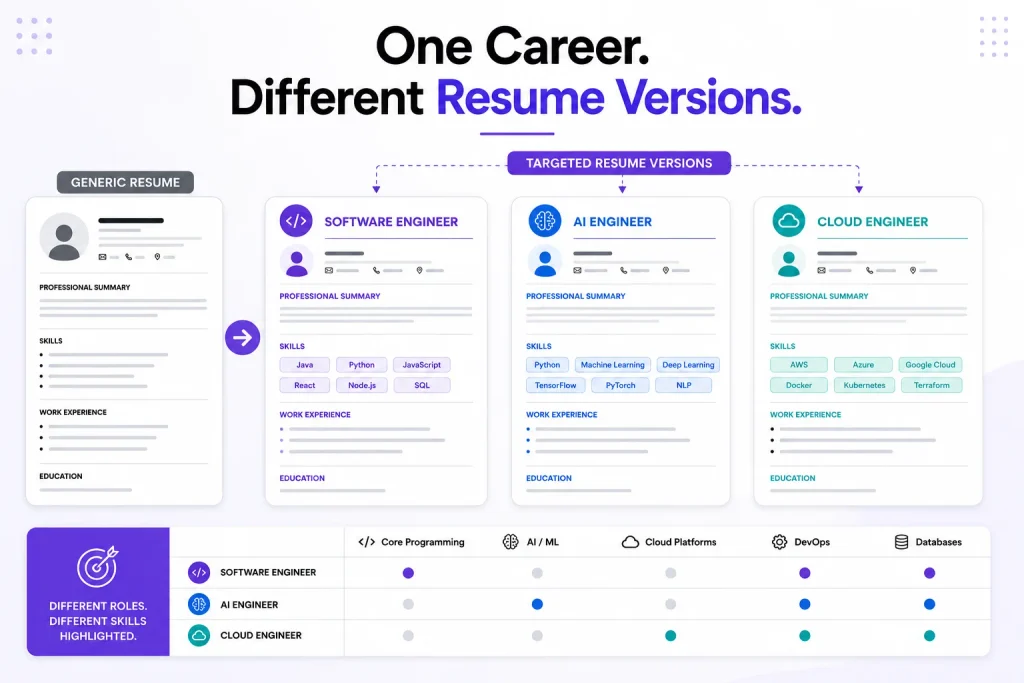
A single general-purpose resume may contain everything you’ve done, but the employer isn’t necessarily looking for everything you’ve done. They want to know whether you are a strong match for this particular position.
Before applying, carefully review the job description.
Look for:
Required technologies
Preferred technologies
Responsibilities
Certifications
Years of experience
Industry knowledge
Soft skills
Specific technical terminology
Then adjust your summary, skills, experience, and project sections accordingly.
Python | Machine Learning | LLMs | APIs | Data | Model Evaluation | Generative AI
Your employment history doesn’t need to change. The emphasis should change according to the role.
Use Keywords Naturally for ATS Screening
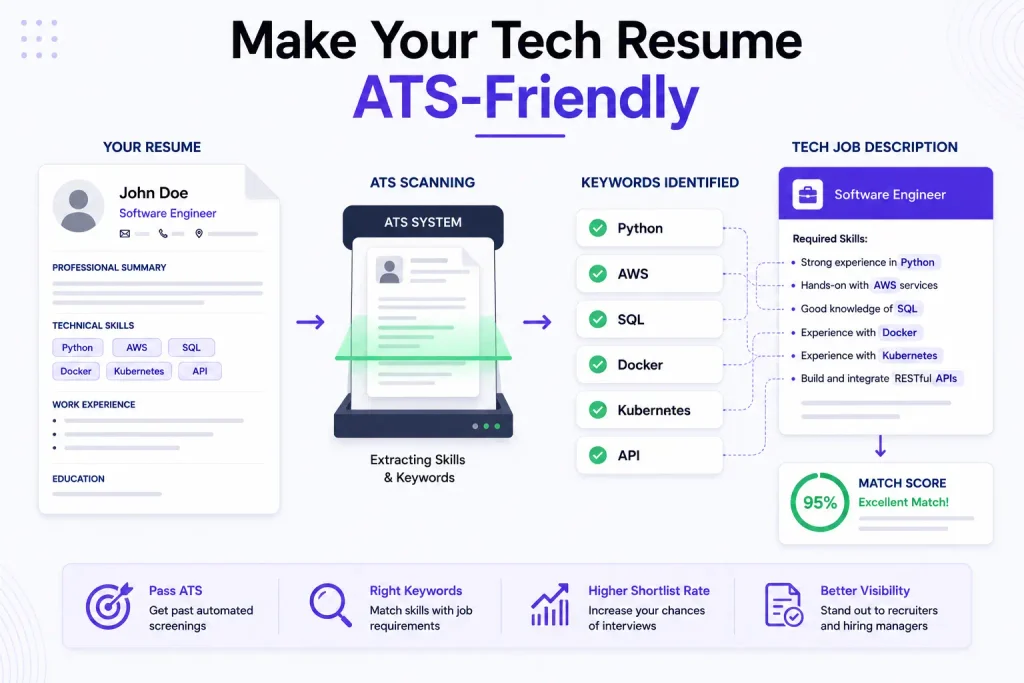
Many employers use Applicant Tracking Systems to help organize and manage applications. These systems may scan resumes for information such as job titles, qualifications, skills, and relevant terminology.
This makes keyword relevance important when creating a Tech Resume.
If the job description specifically requires “Python,” “REST APIs,” and “AWS,” and you genuinely have that experience, use those terms naturally in your resume.
For example:
Developed Python-based REST APIs and deployed applications using AWS services.
This is more useful than adding “Python AWS REST APIs” repeatedly throughout the document.
Avoid keyword stuffing. Your resume should make sense to a human recruiter as well as a screening system.
Consider Regional Differences in Tech Hiring
Technology hiring expectations can vary depending on where you’re applying.
A Tech Resume targeting positions in the United States may emphasize concise achievement statements, role-specific keywords, and ATS-friendly formatting. Applications in other markets can have different expectations around resume length, terminology, or professional information.
If you’re applying internationally, research the conventions used in your target market.
For example, job titles can differ between regions even when the responsibilities are similar. Using terminology that matches the local job description can make your experience easier for recruiters to understand.
For remote positions, also pay attention to requirements involving time zones, work authorization, location restrictions, or remote collaboration.
For more guidance on formatting, keywords, and Applicant Tracking Systems, see our guide to creating an ATS-friendly resume.
Common Tech Resume Mistakes to Avoid
Even technically strong candidates can weaken their applications through simple resume mistakes.
Avoid:
Listing skills you cannot confidently explain
Sending the same resume to every employer
Writing only job responsibilities
Using excessive graphics or complicated formatting
Including outdated technologies without context
Overloading the resume with keywords
Adding irrelevant certifications
Writing long paragraphs
Failing to proofread technical terms
Including broken portfolio or GitHub links
Accuracy matters particularly in technology. If you claim experience with a framework, cloud platform, programming language, or security tool, you should be prepared to discuss how you used it.
How to Improve Your Tech Resume Before Applying
Before submitting your application, compare your resume against the job description.
Ask yourself:
Does my professional summary match the target role?
Are the most relevant technical skills easy to find?
Have I demonstrated how I used those skills?
Are my strongest achievements near the top?
Have I included relevant projects?
Are the keywords accurate and naturally incorporated?
Is the formatting simple and readable?
Have I removed irrelevant information?
Are my technical claims accurate?
Does the resume clearly explain why I fit this particular position?
This final review can help you catch gaps before the recruiter does.
A strong Tech Resume should do more than list your experience. It should present your skills and achievements clearly. Learn more about what makes a professional resume different.
How JobApplyExpert Can Help With Your Tech Resume
Creating a targeted Tech Resume can take time, particularly when you’re applying for different technology roles with different requirements.
JobApplyExpert helps job seekers with professional resume writing, resume customization, job application support, and career consulting. For technology professionals, this can include positioning relevant technical skills, projects, certifications, and achievements around the specific roles they want to pursue.
For a deeper look at why tailoring matters, read our guide to resume customization.
For example, a candidate applying for a cloud engineering position may need to emphasize AWS, Azure, Kubernetes, Terraform, and infrastructure experience, while someone targeting an AI role may need to bring machine learning, Python, data, and generative AI experience forward.
The goal is not to add skills a candidate doesn’t have. It is to present genuine experience clearly and make the strongest evidence of role fit easier to identify.
If you’re unsure which technology career direction to pursue or how to position your experience, career consulting services can provide additional guidance.
Final Thoughts
A successful Tech Resume isn’t simply a document containing every technology you’ve ever used. It is a focused representation of your technical abilities, professional experience, projects, and achievements.
Start with a clean structure. Prioritize relevant technical skills. Show measurable results instead of only responsibilities. Include practical projects where they strengthen your application, and tailor your resume to the requirements of each role.
Most importantly, keep everything accurate and authentic.
The technology industry will continue to evolve, and the tools employers value will change with it. A resume that clearly demonstrates what you know, how you’ve applied it, and the value you’ve created can help you communicate your fit more effectively in a competitive tech job market.
Frequently Asked Questions About Tech Resumes
1. What should a Tech Resume include?
A Tech Resume should generally include contact information, a professional summary, technical skills, work experience, relevant projects, education, and certifications. The exact sections can vary depending on your experience and target role.
2. How do I make my Tech Resume ATS-friendly?
Use a simple layout, standard section headings, readable fonts, and relevant keywords from the job description. Avoid excessive graphics, complicated tables, and unnecessary formatting. Most importantly, only include keywords that accurately represent your experience.
3. Should I customize my Tech Resume for every job?
Yes. Customizing your resume allows you to emphasize the skills, technologies, projects, and achievements most relevant to each position. Your career history stays the same, but the information you prioritize can change depending on the job.
4. Should I include projects on a Tech Resume?
Yes, when they demonstrate relevant technical abilities. Projects can be particularly valuable for students, recent graduates, career changers, and professionals moving into a new technology specialization.
5. How can I make my Tech Resume stand out?
Focus on relevance and evidence. Highlight technical skills that match the position, demonstrate how you applied them, quantify achievements where possible, include relevant projects, and tailor your resume to the specific job rather than submitting the same document everywhere.



 Sep 03,2026

 Sep 09, 2026

