What Is an ATS-Friendly Resume and Why Does It Matter?
Aug 17,2026
Applying for a job can be frustrating when you have the right experience but your resume never seems to reach a recruiter. One reason may be the way employers process applications.
Many companies use an Applicant Tracking System (ATS) to collect, organize, and sometimes screen resumes before recruiters review them. This means your resume needs to be easy for both software and people to read.
An ATS-friendly resume uses clear formatting, relevant keywords, standard headings, and straightforward content so important information can be identified more easily during the hiring process. Being ATS-friendly does not mean writing a resume only for software. The goal is to create a resume that works well for both technology and human readers.
An ATS-friendly resume is a resume with clear formatting, standard section headings, relevant keywords, and readable content that helps an Applicant Tracking System process your qualifications more effectively. It should also make your skills, experience, and achievements easy for recruiters and hiring managers to understand.
An ATS-friendly resume can improve how your application is processed, but it does not guarantee an interview or job offer.
What Is an Applicant Tracking System (ATS)?
An Applicant Tracking System, commonly called an ATS, is software employers use to manage job applications.
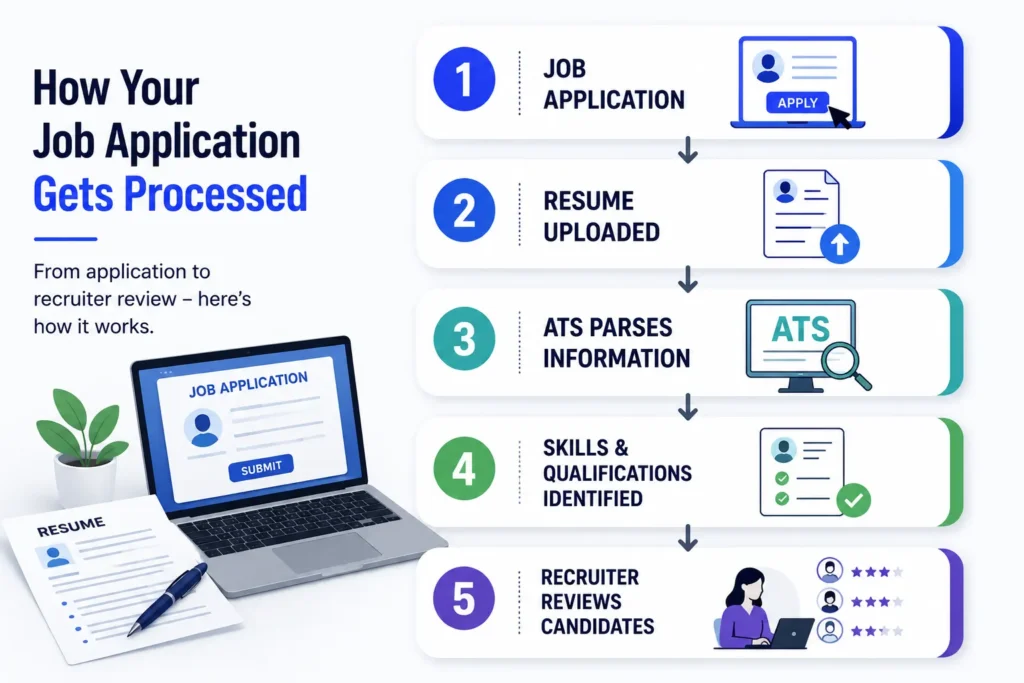
When you apply through a company’s careers website or another online application platform, your resume may be added to an ATS. Depending on the employer and system, the software can help recruiters:
Collect applications in one place
Organize candidates
Search resumes for specific qualifications
Identify relevant skills and experience
Filter or rank applications based on selected criteria
Track candidates throughout the hiring process
For example, imagine a company is hiring a Digital Marketing Manager and the job description asks for experience with SEO, Google Ads, analytics, and content strategy.
A recruiter may use an ATS to help identify candidates whose resumes contain relevant qualifications and terminology. If your resume clearly describes those skills, the system has a better chance of recognizing them.
However, ATS technology varies between employers. There is no single formula that guarantees a resume will pass every system.
Why Does an ATS-Friendly Resume Matter?
A resume may contain excellent experience, but if important information is difficult for software to read or locate, that experience may not be presented effectively during the initial screening process.
An ATS-friendly resume can help make sure that:
Your job titles are clearly identified
Your skills are easy to find
Your work experience is properly organized
Relevant keywords are visible
Your education and certifications are understandable
Your resume can be processed more consistently
Most importantly, ATS optimization is not a guarantee of an interview. Getting through an ATS is only one part of the hiring process. Once a recruiter or hiring manager reviews your resume, your experience, achievements, skills, and overall fit still matter.
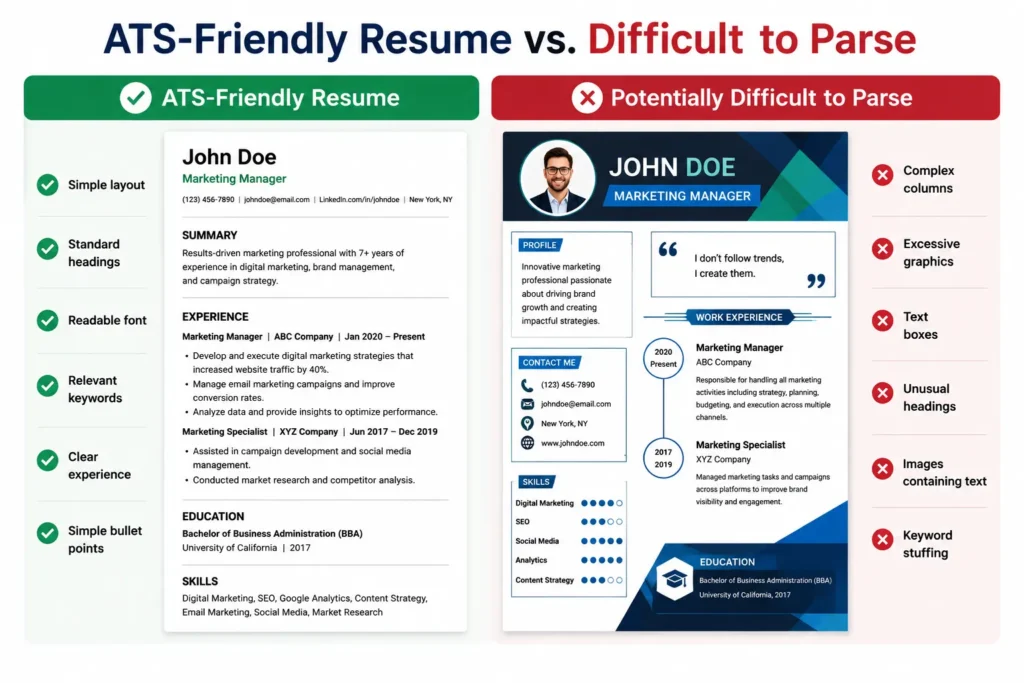
Creating an ATS-friendly resume does not require complicated techniques. In many cases, simplicity is your advantage.
1. Use a Simple, Clean Layout
Choose a straightforward resume structure that presents information in a logical order.
A typical structure might include:
Name and Contact Information
Professional Summary
Work Experience
Skills
Education
Certifications
Additional Relevant Sections
Avoid layouts that depend heavily on design elements to communicate important information.
2. Use Standard Section Headings
Use familiar headings such as:
Work Experience
Education
Skills
Certifications
Professional Summary
Creative headings may look interesting, but standard headings make it easier for both software and recruiters to understand your resume.
3. Choose Readable Fonts
Use a professional, easy-to-read font and maintain consistent formatting throughout the document.
Your resume should be visually clean without relying on decorative fonts, excessive colors, or complicated design elements.
4. Use Relevant Keywords Naturally
Keywords are important because employers may search for specific skills, qualifications, tools, certifications, and job titles.
Start by reading the job description carefully.
Suppose a job posting mentions:
SEO, Google Analytics, content strategy, keyword research, and technical SEO.
If you genuinely have those skills, incorporate them naturally into your resume.
Weak:
Worked on digital marketing activities.
Stronger:
Developed SEO and content strategies, conducted keyword research, and used Google Analytics to monitor website performance.
The second example gives both the recruiter and screening software more useful information.
If you need help creating a resume that combines clear formatting, relevant keywords, and job-specific positioning, you can explore our Professional Resume Writing Services.
How Should You Present Work Experience?
An ATS-friendly resume should still be written for humans.
Don’t simply fill your experience section with keywords. Focus on what you accomplished.
Instead of:
Responsible for managing social media accounts.
Consider:
Managed social media campaigns across multiple platforms and increased audience engagement through content planning and targeted promotions.
Whenever accurate, include measurable results such as percentages, revenue, cost savings, project size, customer numbers, or time saved.
This gives recruiters evidence of your impact instead of simply listing responsibilities.
Expert Insight: What Makes an ATS-Friendly Resume Effective?
At JobApplyExpert, we view ATS optimization as more than simply adding keywords to a resume. A strong ATS-friendly resume should clearly communicate a candidate’s actual experience while making relevant skills, achievements, and qualifications easy to identify.
One common issue we see is that job seekers use the same resume for every application. Even when they have the right experience, their most relevant qualifications may not stand out because the resume is not aligned with the specific position.
Customizing the professional summary, skills, and relevant achievements can make an application more focused while keeping the information accurate and authentic.
The goal isn’t to write a resume for a machine. It is to create a resume that can be processed effectively by recruitment technology while remaining clear and useful to a recruiter.
Common ATS Resume Mistakes to Avoid
Several resume practices can make information harder to process or understand.
Excessive Graphics
Avoid using graphics, icons, logos, or decorative elements to communicate important information.
A human may understand an icon representing a phone number, but a parsing system may not interpret it as reliably as simple text.
Complex Tables
Tables and multi-column layouts can sometimes cause information to be read in an unexpected order.
A simple, single-column structure is generally easier to process.
Text Boxes
Important information placed inside text boxes may not always be extracted as expected.
Keep essential information in the main body of the document.
Unusual File Formats
Follow the employer’s instructions regarding file type.
If the job posting specifically requests a Word document, submit a Word document. If it requests PDF, follow that instruction.
Keyword Stuffing
Adding the same keyword repeatedly does not make a resume stronger.
For example:
SEO, SEO strategy, SEO skills, SEO experience, SEO professional, SEO specialist…
This looks unnatural.
Use relevant terms where they genuinely describe your experience.
Generic Resumes
Sending exactly the same resume to every employer can make it harder to demonstrate your fit for different positions.
Customization is more useful than simply adding more keywords.
If you’re applying consistently but receiving few interview invitations, it may also be useful to understand why your resume is getting rejected.
How to Optimize Your Resume Step by Step
You can create a stronger ATS-friendly resume by following a simple process.
Step 1: Read the Job Description
Identify the most important skills, qualifications, responsibilities, tools, and certifications.
Step 2: Compare the Requirements With Your Experience
Determine which requirements genuinely match your background.
Don’t add qualifications you don’t have.
Step 3: Customize Your Resume
Adjust your professional summary, skills, and relevant achievements to reflect the position.
Use terminology from the job description when it accurately describes your experience.
Step 5: Check Your Formatting
Make sure headings are clear, fonts are readable, and important information isn’t hidden inside graphics, tables, or unusual design elements.
Step 6: Review It as a Recruiter
After optimizing for an ATS, read your resume as if you were a hiring manager.
Ask:
Can I understand what this person does within a few seconds?
Are their most relevant skills obvious?
Do their achievements support their claims?
Does their experience match the position?
This final human review is just as important as technical optimization.
Frequently Asked Questions About ATS-Friendly Resumes
What Is an ATS-Friendly Resume?
An ATS-friendly resume uses clear formatting, standard headings, relevant keywords, and readable content to make it easier for an Applicant Tracking System to process your qualifications.
How Do I Know if My Resume Is ATS-Friendly?
Check that your resume has a simple layout, standard headings, readable text, relevant keywords, and the file format requested by the employer. Most importantly, make sure the content remains easy for a recruiter to understand.
Should I Use Keywords From the Job Description?
Yes, when those keywords accurately describe your skills, qualifications, or experience. Use them naturally rather than repeating them unnecessarily.
Does an ATS-Friendly Resume Guarantee an Interview?
No. An ATS-friendly resume can help your information be processed more effectively, but interviews depend on your qualifications, the employer’s requirements, competition, and the overall hiring process.
Is ATS Optimization More Important Than Good Resume Writing?
No. ATS optimization and good resume writing should work together. Your resume needs to be readable by recruitment technology while clearly communicating your achievements and value to human decision-makers.
Final Thoughts
An ATS-friendly resume can help your application communicate important information more effectively during the early stages of the hiring process. Clear formatting, relevant keywords, standard headings, and achievement-focused experience can make your resume easier for recruitment systems to process and easier for recruiters to evaluate.
But ATS optimization should never replace good resume writing.
The best resume is one that accurately represents your experience, responds to the requirements of the specific job, and remains easy for a human recruiter to understand.
A strong resume is one part of a larger career strategy. If you’re unsure which roles to target or how to position your experience, Career Consultant Services can provide broader career guidance.
Don’t try to beat the system. Make your qualifications easier to recognize. That is the real purpose of an ATS-friendly resume.



 Aug 17,2026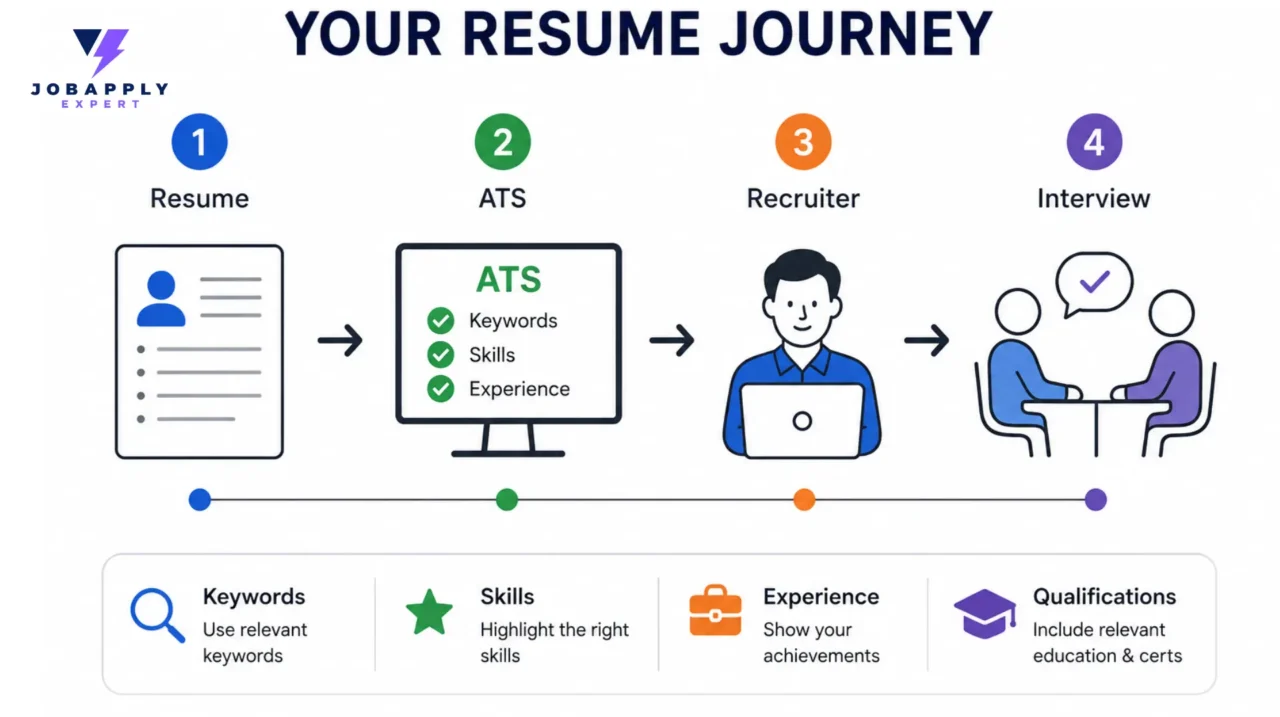

 Sep 09, 2026

